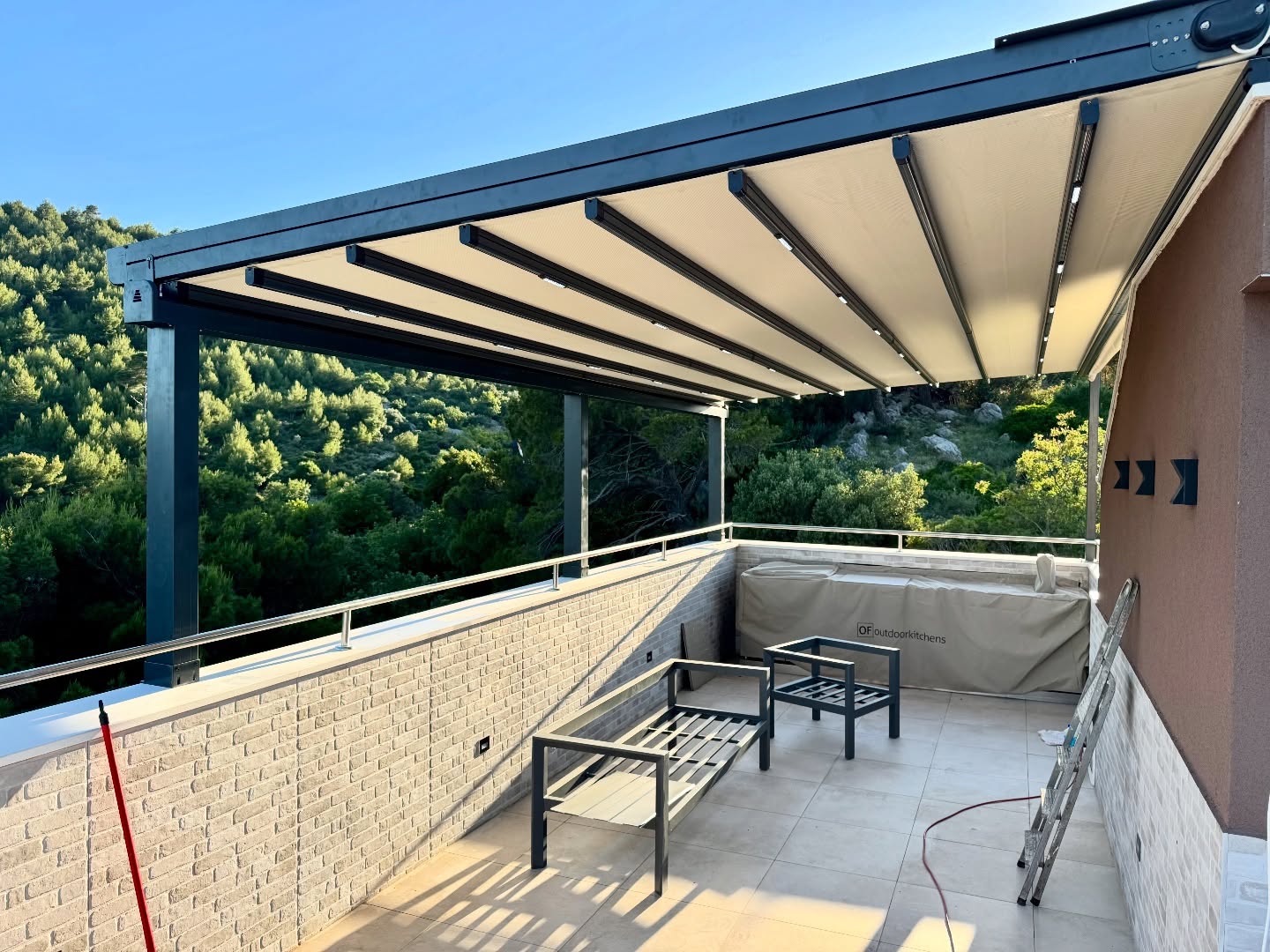
When specifying an outdoor covering system for a terrace, pool deck, garden or commercial outdoor space, buyers face a fundamental choice: motorized louvered roof (bioclimatic pergola), fixed pergola, or retractable awning. Each has a specific use case, cost profile and performance envelope. This guide gives you the honest comparison.
The Three Main Options
| Feature | Bioclimatic (Motorized) | Fixed Pergola | Retractable Awning |
|---|---|---|---|
| Rain protection | ✅ 100% when closed | ❌ None (open structure) | ⚠️ Partial (fabric) |
| Ventilation control | ✅ Precise (0°–135°) | ✅ Full (always open) | ✅ Full when retracted |
| Year-round use | ✅ Yes | ❌ No | ⚠️ Limited |
| Wind resistance | Up to 100 km/h | Very high (rigid) | 30–50 km/h typical |
| Cost (20m²) | €4,500–€18,000 | €1,500–€6,000 | €2,000–€8,000 |
| Planning permission | Sometimes required | Often required | Rarely required |
| Best for | Hospitality, residential premium | Decorative, dry climates | Simple residential shade |
When to Choose a Bioclimatic Pergola
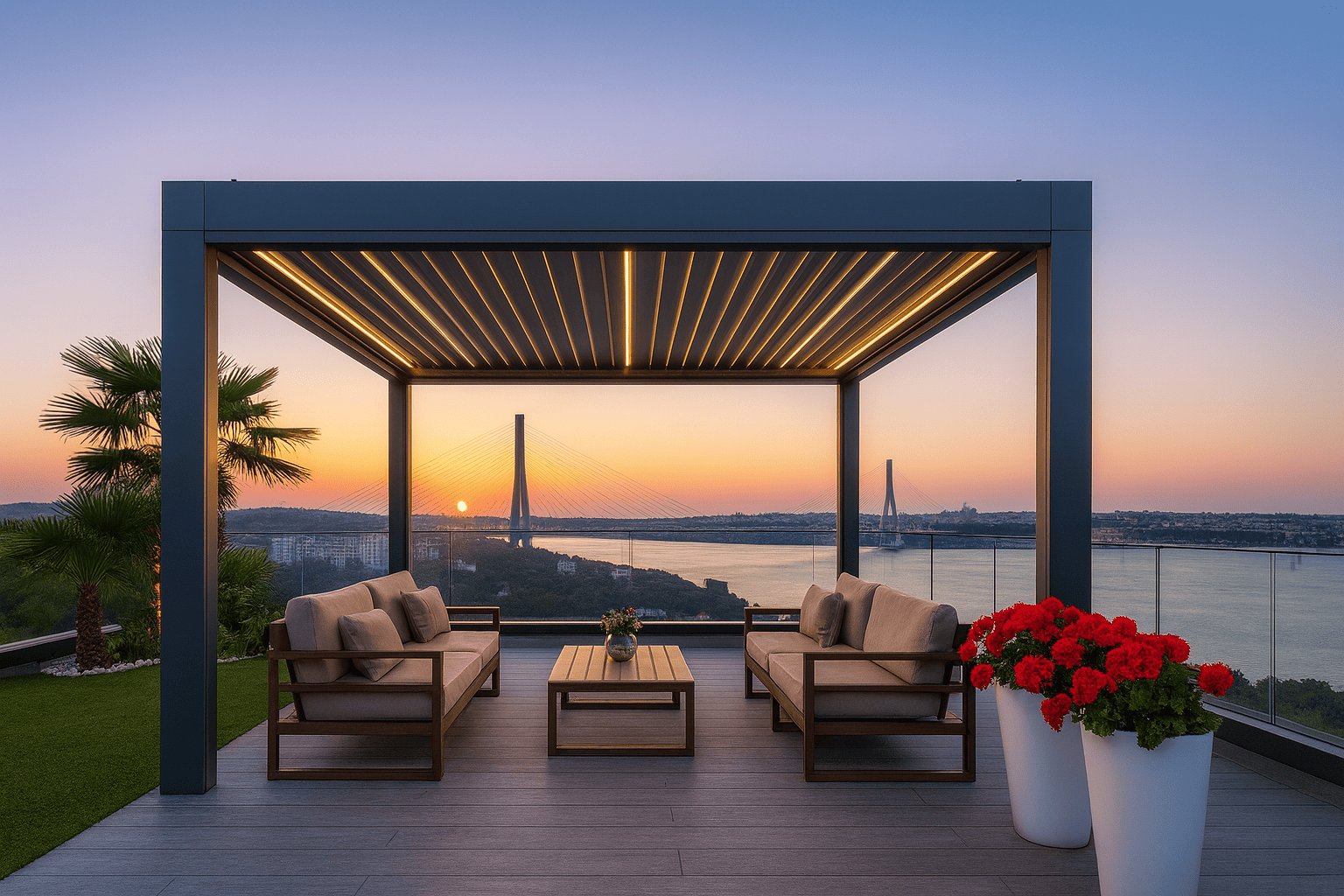
Choose a motorized bioclimatic pergola when the space must generate value in all weather conditions. If you are a restaurant operator, hotel manager, or residential buyer in a climate with rain, wind, or temperature extremes, the bioclimatic system delivers the only meaningful return on investment. A fixed pergola looks beautiful but stops working the moment it rains — and in Germany, the UK, France or the northern US, that means it stops working frequently.
The bioclimatic system also delivers better long-term value in hot climates. In UAE, Saudi Arabia and Mediterranean markets, the precision blade control reduces solar heat gain significantly — at 45° blade angle, a bioclimatic roof blocks 60–75% of direct solar radiation while maintaining full airflow. A fixed pergola with open slats blocks very little; a solid fixed roof blocks ventilation and requires air conditioning to compensate.
When a Fixed Pergola Makes Sense
Fixed pergolas are appropriate when: the budget is genuinely constrained and weather protection is not the goal; the project is in a dry climate where rain is infrequent (certain Mediterranean or desert locations); or the pergola is primarily a decorative architectural element defining a space rather than protecting it. A classic wood or aluminum fixed pergola with climbing plants can be beautiful and appropriate — it simply should not be evaluated against a bioclimatic system as a weather protection investment.
The Hybrid Approach: Bioclimatic Roof + Zip Screen Sides
For maximum performance and flexibility, the most common professional specification combines a bioclimatic pergola roof with zip screen curtain side walls. The roof handles vertical weather (rain, sun, wind load); the zip screens handle horizontal weather (driving rain, cold wind, dust). Combined, the system creates a fully enclosed outdoor room that operates comfortably from -5°C to +45°C ambient temperature with appropriate heating or cooling added. This is the specification used by major hospitality groups across Europe and the Middle East.
Send us your project brief — dimensions, climate, use case, budget. We'll recommend the right system and provide a full factory-direct quote within 48 hours.
Get System Recommendation →